Being a therapist has afforded me the deep privilege of being witness to a multitude of different stories.
Stories some people have uttered before to others, and stories that some have never shared with anyone until that moment with me, sitting across from one another, chair to chair. I’m acutely aware of how important and sacred a position it is to be the person in that other chair, and I take that responsibility very seriously.
Being a therapist has also afforded me the ability to understand the multitude of the experience of pain—the different ways people experience pain and, furthermore, the vast ways in which people feel pained. There is something extremely powerful about language and languaging your story; finally being able to put an experience into the perfect words and sentences can, in itself, bring about a corrective experience. In much the same way, listening to other people’s stories has not only offered me corrective experiences of my own, but has also pulled back the Wizard of Oz curtain, giving me a glimpse into the dramas of what it means to be human. I get to witness the reveal—the truth, in most cases—and in this way, I myself feel more human in witnessing and understanding the underbelly of what it truly means to be human. We all have problems. We all have issues. And there is something universally uniting in knowing the soul struggles of others. In witnessing them, I somehow feel more deeply connected to them and to what it means to be human. And, to no surprise, this vast exposé of our shared humanity renders me, as I am sure it does my patients, more seen and less alone. Every. Single. Time.
For many years, it felt difficult for me to articulate this feeling that seemed to shadow my entire childhood and adulthood. It wasn’t until I started hearing the stories of others that, in waves, it came over me: “I have had that experience too. I understand what she means.”
A patient once said to me, “I’m so tired of always being the strong one. I didn’t even ask to be the strong one. In fact, I’m not even really that strong.”
She was referring to her parents and the dynamic she had grown up in with her younger sister. She and her sister were now both grown adults, but somehow the roles that had been assigned to them as children had followed them there.
Dynamics are always the name of the game. The in-between. The between you and me, the between you and her, and then all of us together as a group. Relationships are made up of this entangled interplay of interlocking attachments between different people, each bringing their own worldview, their own trauma wounds and upbringing, and their own collection of life experiences that have shaped who they are and how they see.
This is what makes the business of dynamics so fascinating and also so difficult to pinpoint. Two people are never simply responding to what is happening between them in the present moment; they are also bringing everything that came before it. No wonder relationships can become so muddied, so fixed, and so repetitive in the dramatic roles that get played out over and over again.
Like in this patient's story—and like on repeat in the many times I have heard some version of the burden of being the strong child—I began to understand a part of my own story that I had never quite been able to language.
Before I become tangential, it's important for me to say this: parents are usually doing the very best they can while trying to navigate their way through a job that literally comes with no handbook or formula. They don't know what temperaments their children will arrive with, what each child will need, or how remarkably different two children raised in the same home can be. Their job is to love, support, guide, and nurture their children as best they can, and to ensure that their children know that if they need them, they will be there. There isn't one fabric of my being that believes my parents intended otherwise.
And yet, intention and impact are not always the same thing.
Like many of the less obvious traumatic injuries that can occur within family systems, these experiences can live unnamable, unseeable, almost hidden—and yet deeply felt. It's the experience of, "Something doesn't feel good, but I can't for the life of me figure out what or where." I believe this is why it can take so long for many people, myself included, to finally language what it was that felt so awful.
The strong child isn't necessarily the child who is actually stronger. They're the child the family has decided can handle more.
The "strong child" is often the eldest. Perhaps some of this comes from the fact that parents are typically harder on their first while they figure out what works and what doesn't. By the time the second or third child comes along, they may have loosened their grip on trying to fill the deep and impossible shoes of "what it means to raise a good, productive member of society." But from the many versions of this story I have heard, the role can become enlisted to the oldest child without them ever knowing about it, and certainly without them ever asking for the job.
Often, it seems to be born from a noted difference in temperament between siblings. One child appears more sensitive. Another seems more resilient. One cries more easily. Another seems to recover quickly. One needs more reassurance, more attention, more protection. The other appears independent, capable, adaptable, maybe even mature beyond their years. And without anyone consciously deciding it, the family begins to organize itself around those perceived differences.
This is where being "the strong one" can initially look almost like a compliment.
You are capable. You are independent. You are mature. You don't need as much. You understand. You can handle it. These become the qualities of being knighted the strong child. But there is a burden hidden inside that knighthood. Because once a child becomes the one who "can handle it," the family can slowly begin to expect them to handle more.
Because here is the part I have come to understand in listening to other people's stories and, eventually, in finding the language for my own: the better you become at carrying things, the less anyone thinks to ask whether they are too heavy. And that is the burden.
I didn't ask to be the fucking strong child.
That role was put upon me, perhaps because on the surface my ability to handle and tolerate things appeared more seamless than my sister's. Perhaps I seemed more resilient, more independent, more able to figure things out. And maybe, in many ways, I was. But what I have come to understand is that there can be an invisible assumption attached to being the strong child: that because you can tolerate more, you somehow hurt less.
But those are two entirely different things. Being able to withstand pain does not mean you don't feel pain. Being capable of figuring something out doesn't mean something didn't hurt you. Being resilient doesn't mean you require less care, consideration, or protection.
Those are two entirely different things.
Being able to withstand pain does not mean you don't feel pain. Being capable of figuring something out doesn't mean something didn't hurt you. Being resilient doesn't mean you require less care, consideration, or protection.
There is a reason people sometimes become tired of being told how strong they are. What is intended as a compliment can begin to feel strangely minimizing, as though being strong somehow means the experience wasn't that painful, or that you should be able to move through it more easily.
But strength doesn't disappear simply because something is hard. You don't become less resilient because something hurts you, overwhelms you, or even temporarily knocks you down.
But somehow, the strong one means you can endure more adversity because you will get through it. The strong one requires fewer check-ins, fewer asks of, “How are you?” or “How did that make you feel?” The strong one is expected to lead the way. You are the one to be leaned upon, especially when the ones who aren't “deemed the strong one” struggle.
There is no space for the strong one's fragility or vulnerability because, in the mythology of the role, the strong one doesn't have any. She is strong. Things ricochet off her as if she is some kind of superhero.
Except, of course, they don't.

I don't believe the message is ever intentionally, “Your pain matters less.” I think the message is much more subtle and probably much more loving than that: You'll be okay. You are strong. You can get through this.
But when you hear some version of that message often enough, the impact can begin to feel remarkably similar. Your hurt can become minimized not because nobody cares, but because everyone believes you are more resilient. And resilience can quietly become the reason more is asked of you. When strength becomes an identity someone has to continually live up to, it can quietly rob them of the permission to struggle. There has to be room for the strong child to not be strong sometimes—to hurt, to fall apart, to need more, to not know what to do.
None of that makes them any less strong.
That is the strange burden of being the strong child. Your strength is real. Your resilience may be real. Your ability to carry difficult things may be real. But none of those things mean they aren't heavy.
Perhaps this is why finally being able to language something matters so much. For me, hearing versions of this story in the lives of other people slowly helped me recognize it in my own. What had once felt unnamable began to make sense. I could see the role I had occupied, how it had formed, and how easily I had continued participating in it long after I was no longer a child.
And strangely, understanding it didn't leave me feeling particularly interested in blame. It left me feeling interested in choice. Because there comes a point when understanding why a dynamic exists doesn't mean you have to keep participating in it. I can understand how I became the strong one. I can understand how the people I love came to see me that way. I can even understand how everyone involved was responding from their own wounds, temperaments, histories, and capacities.
But understanding something is not the same as consenting to it. And I think this has been the most freeing part for me. I don't need anyone else to agree with my version of the story in order to step out of the role I was given in it. I don't have to keep absorbing more, tolerating more, understanding more, being minimized more, or carrying more simply because I have historically been capable of doing so.
There doesn't have to be a villain. There doesn't even have to be a grudge. There can simply be a realization: I was given a role I never asked for, and I am no longer willing to play it. I am still strong. I am still resilient. Those parts of me were never the problem.
I just finally understand that being able to carry something doesn't mean it belongs to me to carry.
For me, stepping out of the role has meant more than simply understanding that I was in it. It has required me to notice the moments when the old dynamic is being recreated and to make a conscious decision not to participate. Sometimes that means speaking up when I notice that more protection, understanding, or accommodation is being extended in one direction while I am once again assumed to be the person who will be okay. It means being willing to say, “But what about how this affected me?” even when everyone involved may be much more accustomed to worrying about how someone else is feeling.
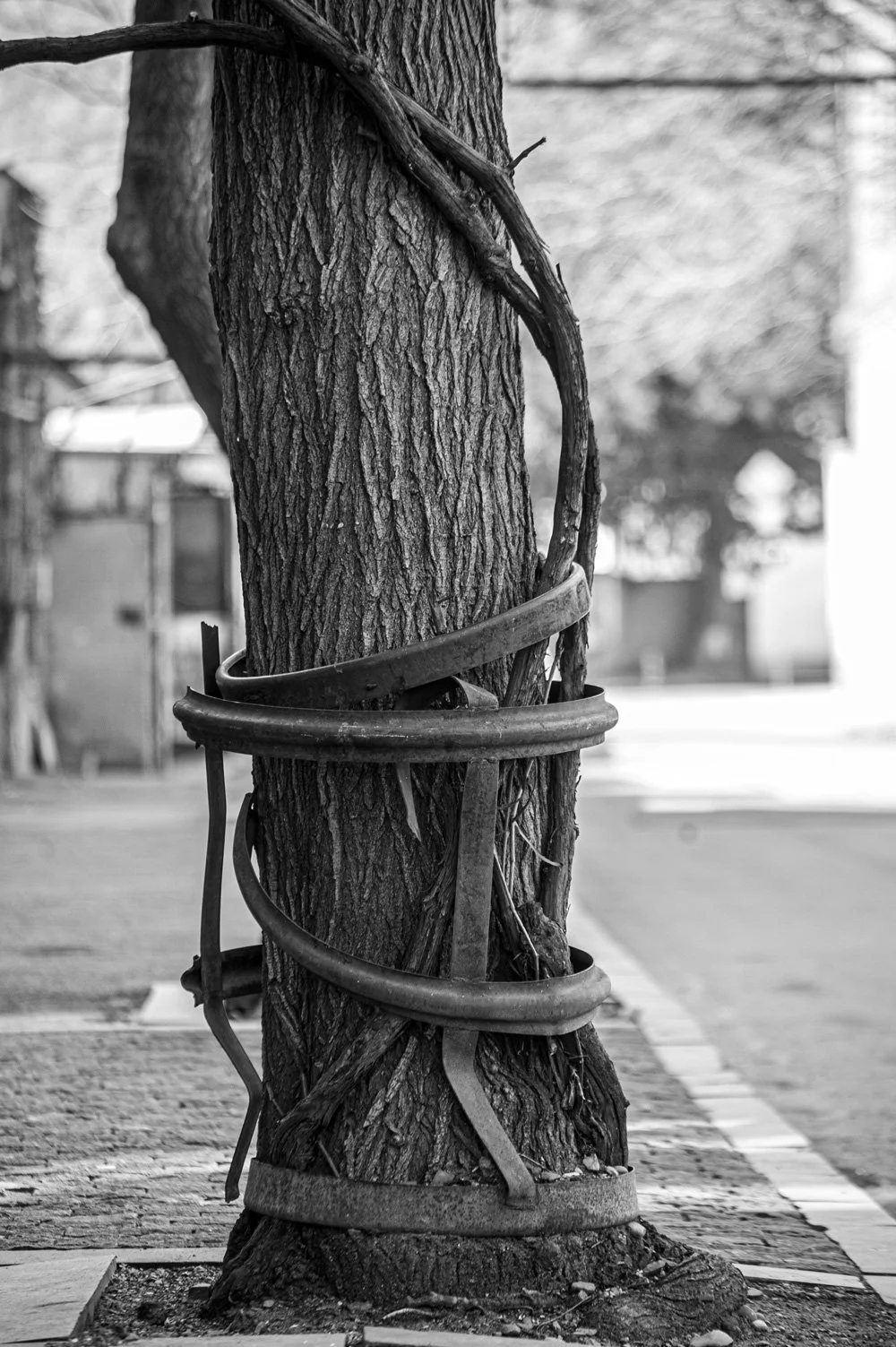
And sometimes stepping out of a role requires something much harder.
There are relationships in which repair becomes nearly impossible when accountability only seems to travel in one direction. Relationships require some capacity to hear one another, to tolerate the discomfort of having caused hurt, to reflect on our own behaviour, and occasionally to say, “I can see how I hurt you.” Without that, one person can find themselves continually being asked to understand, forgive, accommodate, or move on while very little is required from the person on the other side.
For the strong child, this can feel eerily familiar. It is the same old assignment in its adult clothing: You are stronger. You understand more. You can handle this. So you be the one to bend.
At some point, I realized that refusing that assignment might also mean accepting that some relationships cannot continue in the form I desperately wished they could. Not as punishment. Not because I am holding a grudge. And not because I believe I have been faultless in them. But because I no longer believe that loving someone requires me to participate indefinitely in a relational dynamic that asks me to carry both my own hurt and someone else's unwillingness to look at theirs.
That has perhaps been the hardest part of stepping out of the role. Sometimes choosing not to carry something doesn't make everyone around you understand why you've put it down. You have to be willing to put it down anyway. And you have to also accept that others may never understand you. And I am okay with that.